
TyBOT
“The efficiency of the robot was awesome! It was definitely a big help to our schedule.”
Courtney Holman
Owner, Steel Enforcers
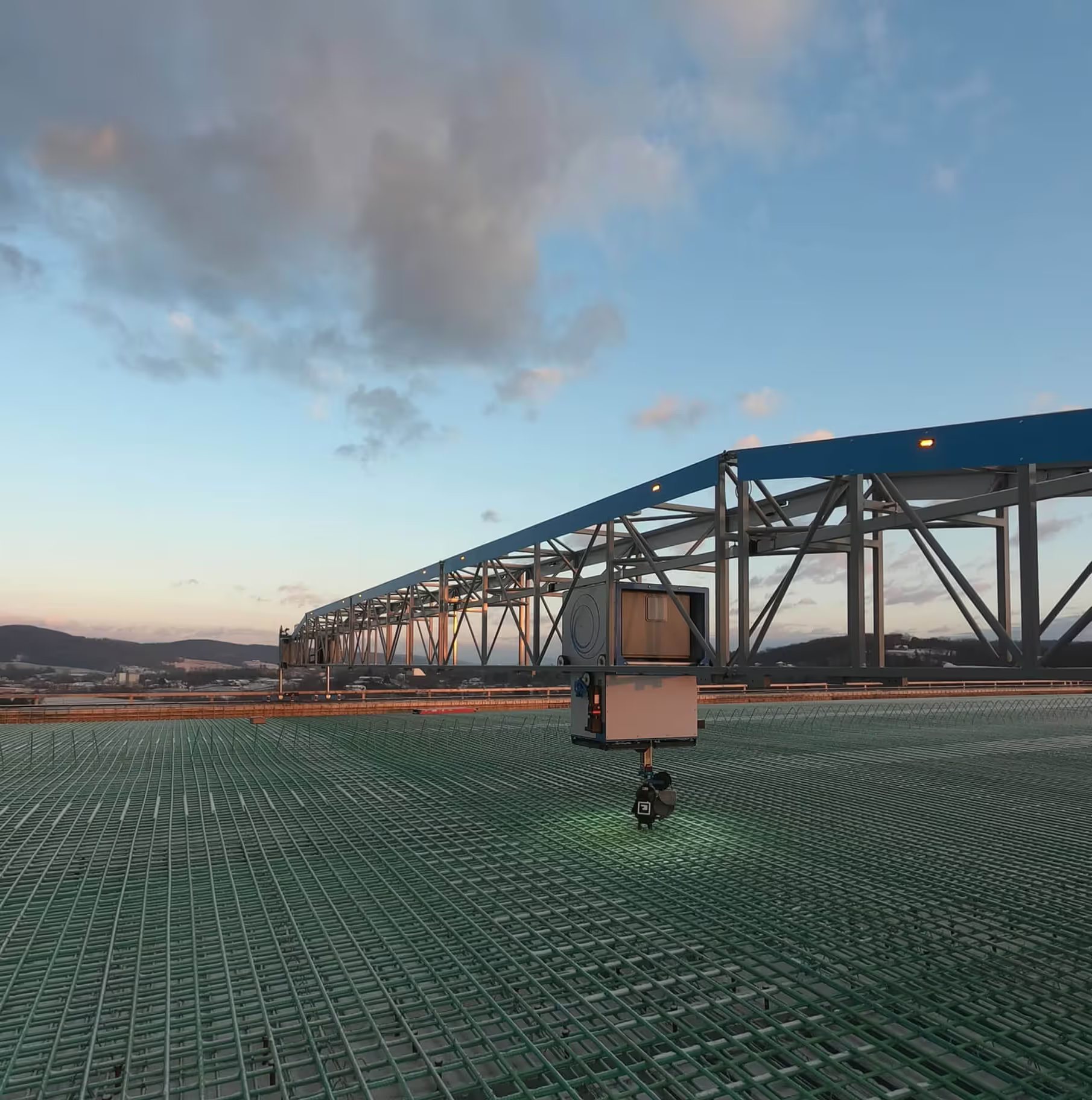
TyBot recently completed its first project for rebar subcontractor Steel Enforcers, Inc. on Collins Creek Bridge in Mobile County, AL. This 37,000 square foot bridge deck had a 50% tie requirement for both top and bottom mats. Extreme weather conditions interrupted rebar installation multiple times, making schedule an even higher priority than usual. TyBot was glad to help. Thank you, Steel Enforcers! Check out the full project details on our Projects page HERE.
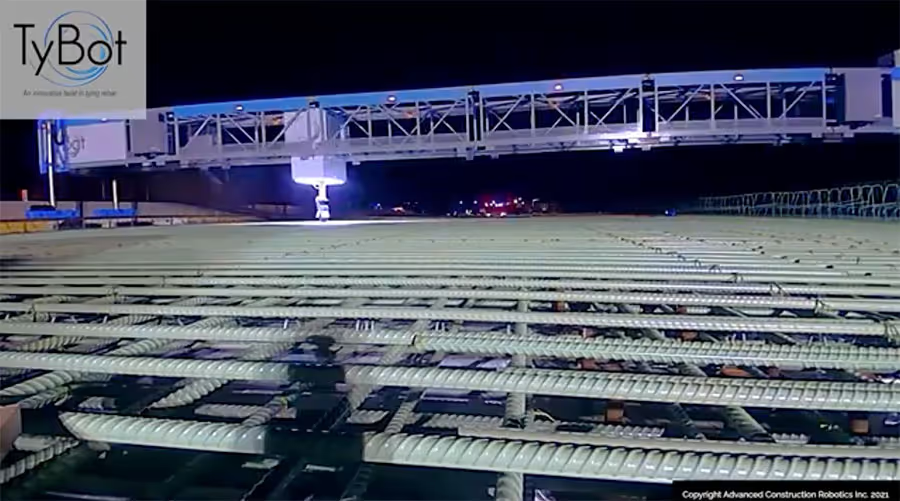
Thank you to Beech Construction for bringing TyBot back for yet another project. TyBot joined Beech’s rebar team on the Freedom Road Turnpike Bridge Project in Butler County, PA. As part of PennDOT’s Accelerated Bridge Construction Program, the structure was constructed in sections off-site and moved into final position requiring only short-term closures. TyBot contributed to meeting the project’s enhanced schedule demands by tying continuously for 19 straight hours!
For full project details check out the project listing.
Check out the timelapse below:
More photos of the Freedom Road Project:

TyBot once again captured the eyes of the industry by earning one of ConstructionJunkie’s top 10 most read articles of 2020. It's safety benefits and productivity enhancement have become hard to ignore in the industry. Read what Shane Hedmond from Construction Junkie had to say below:
" Last week, I spent some time out in Las Vegas to attend the World of Concrete 2020, which is an immersive experience for all things concrete and masonry related. While there, I was able to catch up with the team from Advanced Construction Robotics, the makers of TyBot, the autonomous rebar tying robot.The TyBot uses a series of cameras and artificial intelligence to identify the intersections of rebar, so no operator or pre-programming is necessary. Once the machine is setup on the screed rails, it can tie up to 1,000 ties per hour. With its typical uses being in bridge work and manufacturing facilities, the width of the TyBot can expand anywhere from 9 feet to 100 feetAlthough TyBot is pretty hefty, weighing in at a maximum of 8,100 pounds, it can be transported on a 40 foot trailer with the equivalent of a Ford F250. The robot is powered by a Cummings Onan QG 5500 EFI generator with a fuel consumption rate between 0.35 gallons per hour to 0.95 gallons per hour, based upon the size of the load.
There’s no doubt that tying rebar is difficult and repetitive work for rodbusters, which makes it a prime target for robotics in the field. The hand tying process can not only cause carpel tunnel syndrome, but chronic back problems from bending and reaching for several hours a day. TyBot claims a substantial increase in productivity and a decrease in schedule with use of the robot, considering that it can work continuously and in difficult weather, such as extreme heat and heavy rains."
Read the full article and watch the video HERE.
See the full list of rankings HERE:
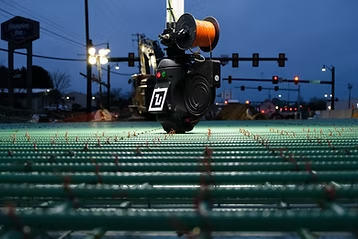
We are pleased to announce that in April, TyBot officially reached the 2,000,000th job-site tie milestone. Our world-class team has successfully completed a total of 27 project deployments and has an exciting slate of jobs scheduled to close out 2021. TyBot has worked for a multitude of distinguished General Contractors and Rebar Subcontractors from Boston, MA to Miami, FL. Check out our new Project Portfolio page to learn more.
Those who have used TyBot on their projects will tell you that it isn't science fiction. TyBot is construction’s most advanced rebar installation equipment that dramatically reduces schedule risk and enhances your workforce’s productivity while keeping them safer! Read EquipmentWorlds coverage of this achievement HERE.
CONTACT Bryce Nelson
COMPANY Advanced Construction Robotics
PHONE 724-443-1533 x50478
EMAIL marketing@constructionrobots.com
WEB www.ConstructionRobots.com
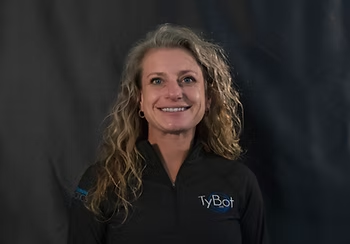
Pittsburgh, PA, May 25, 2021 - Advanced Construction Robotics (ACR) is pleased to announce that Danielle Proctor has been appointed as the company’s Chief Executive Officer. Proctor brings to ACR 25 years of construction, software, technology, new product development and leadership experience, and will immediately assume day-to-day leadership of ACR’s business operations.
Jeremy Searock will continue his role as President and Chief Technology Officer, leading current and future product innovation. Stephen Muck will remain actively involved as Chairman, providing strategic oversight as ACR continues to bring robotic equipment to the construction industry.
“Danielle has proven herself a valuable difference-maker within our company,” said Searock. “She provides the perfect storm of industry knowledge, entrepreneurial experience, and leadership abilities. Stephen and I couldn’t be more excited to work with Danielle to make robots just another machine at the jobsite.”
A graduate of Carnegie Mellon University, Proctor began her career as a Senior New Products & Industry Manager at Management Science Associates, involved with the product and business development of an automated business intelligence system for the Consumer-Packaged Goods industry. She then joined FreeMarkets, later acquired by Ariba, as part of the product management team that designed and launched the software interface for their auction-based supply-chain management service.
Proctor’s entrepreneurial spirit quickly took over and, at the age of 28, she founded Amelie Construction & Supply, a certified Woman/Disadvantaged Business Enterprise (W/DBE) construction firm providing structural rehabilitation, erection, and foundation services throughout the eastern region where she served as President & CEO for 12 years until selling her ownership in 2015. Proctor continued to pursue her passion of being involved with start-ups by founding and acquiring several smaller ventures as well as providing private funding and consulting to companies during their critical formation stages.
Proctor’s unique combination of skill sets caught the eye of ACR co-founders Muck and Searock, who invited her to join the ACR Team as the head of Business Development in 2020.
“I’ve watched Danielle over the last 18 years develop and grow from a young entrepreneur into a mature leader capable of succeeding in a male-dominated environment,” said Muck. “I am excited to see this duo innovate and commercialize robots for an industry that is ripe for disruption.”
+++++++++++++++++++++++++++++++++++++++++++++++++++++++++++++++++++++++++++++++++++
About ACR
Pittsburgh-based Advanced Construction Robotics, Inc. (ACR) was co-founded in 2016 by Stephen Muck, CEO of Brayman Construction Corporation and Jeremy Searock, formerly of Carnegie Mellon University’s National Robotics Engineering Center. The co-founders' vision is to utilize robotics and artificial intelligence to innovate and commercialize a wide range of autonomous products to lead the long-term transformation of the construction industry towards enhanced productivity, improved safety, increased profits, and reduced schedule risk.
Discover Our Rebar Robots
Explore how TyBot and IronBot can revolutionize your rebar installation process today.